NMN doubts answered
Does Oral NMN Survive the Gut? In Human Trials, Blood NAD+ Rose
In human trials, oral NMN raised blood NAD+, and in one trial older adults had shorter 4-meter walking times and better sleep-quality scores. The trials were small and short.
Reader-supported: this page has affiliate links to Renue By Science. If you buy through them we earn a commission, which funds our research. We choose what to cover independently. How we’re funded
Article info
Evidence: 8 papers, 5 human studies, 3 reviews.
Research and article information
How we made this. Checked against every study we cite. It is not medical advice.
Updated:
How we check · Methodology · Is NMN legal in US supplements? · Corrections · How we’re funded

The evidence
8
studies behind this article
5 human studies · 3 reviews
‘Doesn’t my body make enough NAD+ already?’
Your body does make NAD+ on its own. A precursor adds to it: in a randomized, placebo-controlled 14-day trial of 65 healthy adults, NR and NMN both raised circulatory NAD+, while nicotinamide did not (Christen 2026). In older adults, 250 mg of NMN a day for 12 weeks raised blood NAD+ over placebo (Morifuji 2024).

‘Oral NMN gets destroyed in the gut’
This is a common doubt, and the trials do not support it as a reason NMN can’t work. In the 14-day trial of 65 healthy adults, daily NMN raised circulatory NAD+. Using human gut bacteria in the lab, the authors found NR and NMN are turned into nicotinic acid, and they propose that this gut-made form raises NAD+ through the Preiss-Handler pathway (Christen 2026). So, on the authors’ model, the marker can rise without NMN being absorbed intact. The study did not show whether any intact NMN reaches the blood, and that question is open.
‘It’s all mouse data’
It is not. A 60-adult, 12-week trial raised blood NAD+ in older adults (Morifuji 2024). A trial in healthy older men taking 250 mg a day for 6 or 12 weeks did the same (Igarashi 2022). A 6-week trial of 48 recreational runners found that 600 and 1,200 mg a day raised measures of aerobic capacity more than placebo while they trained (Liao 2021). A 65-adult, 14-day trial compared NR, NMN and nicotinamide in the same study (Christen 2026). For NR, a 2 × 6-week crossover trial raised NAD+ in healthy middle-aged and older adults (Martens 2018). A 2025 meta-analysis of 12 studies and 513 adults found NMN raised blood NAD+ overall (Zhang 2025).
8 studies published from 2018 to 2026; the largest, a meta-analysis, pooled 513 people
Show the data behind this chart
| Study | Year | People (n) | Grade | In humans |
|---|---|---|---|---|
| Christen 2026 | 2026 | 65 | A | Yes |
| Liao 2021 | 2021 | 48 | A | Yes |
| Igarashi 2022 | 2022 | not reported | A | Yes |
| Morifuji 2024 | 2024 | 60 | A | Yes |
| Martens 2018 | 2018 | not reported | A | Yes |
| Zhang 2025 | 2025 | 513 | A | Yes |
| Prokopidis 2025 | 2025 | not reported | A | Yes |
| Yang 2026 | 2026 | not reported | A | Yes |
Figure 1. Every study cited in this article, by year published and number of people studied. Color shows the evidence grade. Studies that reported no sample size sit in the separate strip below the chart.
Source: Healthspan Post analysis of the 8 studies cited in this article (PubMed).
‘The trials are small and short’
Fair. The trials above enrolled a few dozen people each and ran for two to twelve weeks (Christen 2026; Liao 2021; Morifuji 2024). Morifuji and Liao were double-blind and placebo-controlled; Christen was placebo-controlled but open-label. The 2025 meta-analysis rated risk of bias as “some concerns” in seven of its 12 studies and high in the other five (Zhang 2025). A 2026 review of 15 trials, lasting 14 days to 24 weeks, called for larger and longer trials (Yang 2026).
‘Does it raise the right thing, or just a marker?’
Blood NAD+ is what a precursor is meant to raise, and the 2025 meta-analysis found NMN did so across 12 studies and 513 adults (Zhang 2025). Some trials also measured function: older adults on 250 mg a day had shorter 4-meter walking times and better sleep-quality scores than placebo after 12 weeks, though the main stepping test showed no difference (Morifuji 2024), and runners on 600 or 1,200 mg a day improved aerobic-capacity measures, though not VO2max itself (Liao 2021).
Not every outcome moved. The same meta-analysis found no significant difference on most of the other outcomes it pooled (Zhang 2025), and a 2025 review of NMN and NR trials in adults with mean ages of 60.9 to 83 found no significant effect of NMN on handgrip strength, gait speed or muscle mass (Prokopidis 2025).
Figure 2. The molecule is the same in every form; the form changes the dose format, convenience and cost per dose. Few human trials compare forms head to head.
Source: Healthspan Post, from product labels.
‘How much did the trials use?’
The older-adult trials gave 250 mg a day (Morifuji 2024; Igarashi 2022), the runner trial 300, 600 or 1,200 mg a day (Liao 2021), and the trials in a 2026 review ranged from 250 to 2,000 mg a day (Yang 2026). At 250 mg per capsule, one capsule matches the 250 mg trials, and a two-capsule serving gives 500 mg. Cost per dose depends on pack size and changes often, so check the price table rather than a sticker price. Our code HEALTHSPAN takes 10% off.
Figure 3. NMN sits one step from NAD+ in the salvage pathway, the main route cells use to keep NAD+ topped up.
Source: Covarrubias et al., Nature Reviews Molecular Cell Biology, 2021 (PubMed 33353981).
What we checked
- Lab result vs label
- 101.6% of the NMN on the label. Lot 062827351, Summit Nutritional Laboratories
- Cost per 500 mg
- $1.44 Median across Renue's NMN range: $0.92
- Where it sits in Renue's NMN range, cost per 500 mg
This product Same-molecule products · USD per 500 mg · Prices checked November 12, 2026
Products and prices
- NMN Pure Powder: $0.27
- NMN SLC Enteric Capsules 200: $0.59
- NMNs Fast Dissolve Tabs: $0.92
- NMN Liposomal Capsules: $1.44
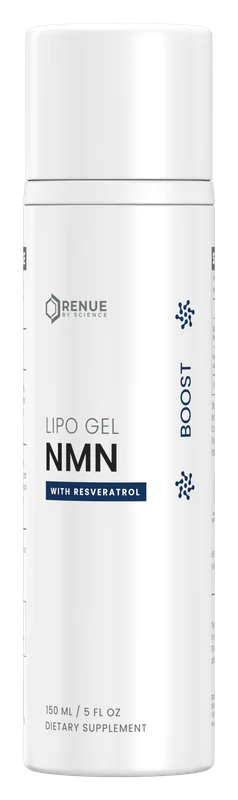
- NMN Resveratrol Gel: $1.78
- Human studies in this article
- 5 5 randomized trials (study design grade A)
COA reviewed October 10, 2026: we read the certificates of analysis Renue publishes; we don't run lab tests ourselves. Every report we checked · Price index
Show the scienceStudy-by-study table: 8 studies, design, dose and grade
The evidence
Every study cited in this article. Grades: A human RCT, meta-analysis or systematic review.
| Study | Design | People | Dose / duration | Result | Grade | Source |
|---|---|---|---|---|---|---|
| Christen 2026[1] | RCT | 65 healthy adultsn = 65 | 14 days | NR and NMN comparably raised circulatory NAD+; nicotinamide did not | A | PubMed 41540253 |
| Liao 2021[2] | RCT | 48 young and middle-aged recreationally trained runnersn = 48 | 300, 600 or 1200 mg/day, with 40-60 min training 5-6 times a week · 6 weeks | VO2, %VO2max and ventilatory-threshold power rose more at 600 and 1200 mg than placebo; VO2max and peak power unchanged | A | PubMed 34238308 |
| Igarashi 2022[3] | RCT | healthy older men | 250 mg/day · 6 or 12 weeks | raised blood NAD+; nominally significant gait speed and left grip gains need validating; no effect on body composition | A | PubMed 35927255 |
| Morifuji 2024[4] | RCT | 60 older adultsn = 60 | 250 mg/day · 12 weeks | raised blood NAD+, shorter 4-m walking time and better sleep-quality scores than placebo; no difference in the primary stepping test | A | PubMed 38789831 |
| Martens 2018[5] | RCT | healthy middle-aged and older adults | 2 x 6-week crossover | well tolerated and raised NAD+ metabolism | A | PubMed 29599478 |
| Zhang 2025[6] | meta-analysis | 513 adults across 12 studiesn = 513 | not reported | NMN raised blood NAD+; most other outcomes not significantly different | A | PubMed 39116016 |
| Prokopidis 2025[7] | meta-analysis | adults with mean ages of 60.9 to 83 years | not reported | NMN showed no significant effect on skeletal muscle index, handgrip or gait speed | A | PubMed 40275690 |
| Yang 2026[8] | meta-analysis | adults in 15 trials, 10 in the safety analyses | 250-2000 mg/day · 14 days to 24 weeks | no increase in adverse events or liver enzymes; broad metabolic benefits not evident | A | PubMed 42514320 |
Questions readers ask
Does oral NMN actually get into the body?
Blood NAD+ rose after oral NMN in the trials that measured it. A 2026 trial's authors propose that gut bacteria turn NMN into nicotinic acid, which then raises NAD+, so it may work without being absorbed intact. Source PubMed 41540253
How much NMN did the trials use?
250 mg a day in a 12-week trial of 60 older adults. Source PubMed 38789831
Is NMN well tolerated?
A 2026 review of 15 trials, 10 of them in its safety analyses, found NMN did not increase adverse events or liver enzymes over 14 days to 24 weeks. Source PubMed 42514320
Does NMN improve energy or fitness?
In a 6-week trial of 48 recreational runners training 5 to 6 times a week, 600 and 1,200 mg a day raised aerobic-capacity measures more than placebo; VO2max itself did not change. Source PubMed 34238308
Does NMN support muscle as you age?
A 2025 review of trials in adults with mean ages over 60 found no significant effect of NMN on handgrip strength, gait speed or muscle mass; the authors called for research on dose, baseline NAD+ levels and combined approaches. Source PubMed 40275690
NMN Liposomal Capsules: the trade-offs
Why people choose it
- 500 mg NMN per 2-capsule serving
- Capsules: no measuring or taste
- Liposomes are designed for slower, sustained release (Renue's description)
Things to know
- A serving is 2 capsules; one bottle of 90 is 45 servings
- No human trial we have reviewed tested liposomal NMN against plain NMN
Next step
Ready to compare forms and doses? Our product finder walks you through the choice on your own terms.

Renue NMN Liposomal Capsules
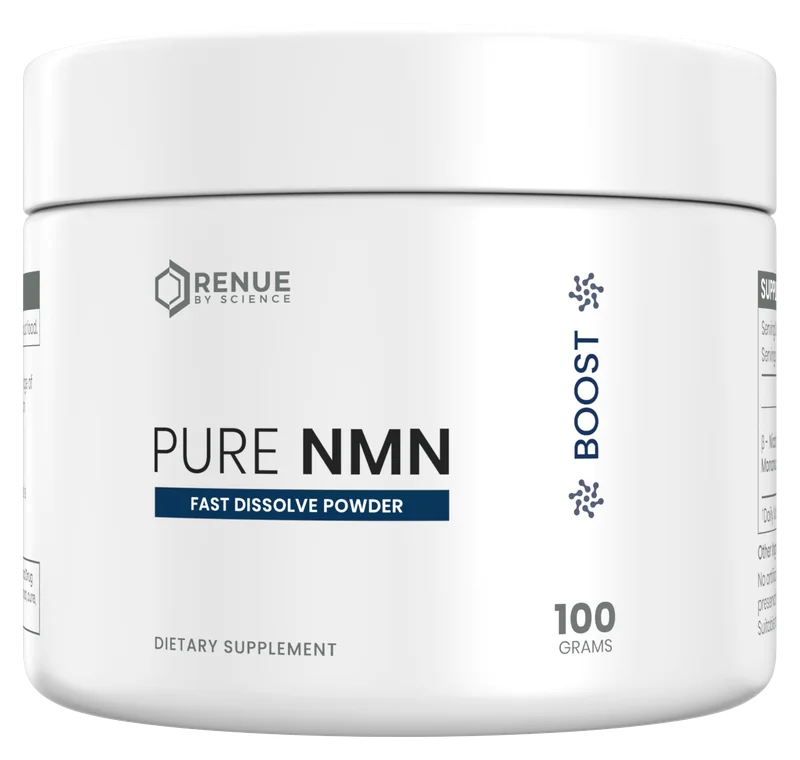
Renue NMN Liposomal Capsules hold 250 mg of NMN per capsule, 90 capsules to a bottle. Renue’s serving is two capsules (500 mg), and one capsule matches the 250 mg a day used in the older-adult trials. Renue describes NMN as a direct precursor to NAD+, which people take to support cellular energy production, repair and recovery processes. Compare the cost per dose on the price table: Renue NMN Liposomal Capsules
*These statements have not been evaluated by the Food and Drug Administration. This product is not intended to diagnose, treat, cure, or prevent any disease.
Support our research
Related
NMN clinical trials: tested in people? Blood NAD+ rose.
How to take NMN powder: dose, form, timing and supply
How do you take NMN powder? In human trials, 250 to 900 mg of NMN a day raised blood NAD+
NMN Resveratrol Gel dosing
Does the NMN Resveratrol Gel match the trial doses? In a 60-day trial, blood NAD+ rose at 300 to 900 mg a day; a serving holds 240 mg
References
View all 8 cited studies
- Christen S, Redeuil K, Goulet L, et al. (2026). The differential impact of three different NAD+ boosters on circulatory NAD and microbial metabolism in humans. Nat Metab. PubMed 41540253
- Liao B, Zhao Y, Wang D, et al. (2021). Nicotinamide mononucleotide supplementation enhances aerobic capacity in amateur runners: a randomized, double-blind study. J Int Soc Sports Nutr. PubMed 34238308
- Igarashi M, Nakagawa-Nagahama Y, Miura M, et al. (2022). Chronic nicotinamide mononucleotide supplementation elevates blood nicotinamide adenine dinucleotide levels and alters muscle function in healthy older men. NPJ Aging. PubMed 35927255
- Morifuji M, Higashi S, Ebihara S, et al. (2024). Ingestion of β-nicotinamide mononucleotide increased blood NAD levels, maintained walking speed, and improved sleep quality in older adults in a double-blind randomized, placebo-controlled study. Geroscience. PubMed 38789831
- Martens CR, Denman BA, Mazzo MR, et al. (2018). Chronic nicotinamide riboside supplementation is well-tolerated and elevates NAD+ in healthy middle-aged and older adults. Nat Commun. PubMed 29599478
- Zhang J, Poon ET, Wong SH (2025). Efficacy of oral nicotinamide mononucleotide supplementation on glucose and lipid metabolism for adults: a systematic review with meta-analysis on randomized controlled trials. Crit Rev Food Sci Nutr. PubMed 39116016
- Prokopidis K, Moriarty F, Bahat G, et al. (2025). The Effect of Nicotinamide Mononucleotide and Riboside on Skeletal Muscle Mass and Function: A Systematic Review and Meta-Analysis. J Cachexia Sarcopenia Muscle. PubMed 40275690
- Yang W, Huang J, Tang Z, et al. (2026). Safety and Metabolism-Related Outcomes of Oral Nicotinamide Mononucleotide Supplementation in Adults: A Systematic Review and Meta-Analysis. Nutrients. PubMed 42514320